Tuesday, September 13, 2011

Setting a Budget That Won't Break the Bank This Christmas

Budgeting for the Christmas holidays is becoming more and more important for most households as tough financial measures start to bite across the globe. Setting your budget can be a daunting task and many people will struggle with where to start. It can be done easily though and all you need is a sheet of paper, a pen and a good idea of what state your personal finances are in.

To start from scratch, write down all the things that you will be doing, or usually like to do, over the Christmas holiday season. This could be gift shopping, nights out, entertaining at home or even travelling to see friends and family. Recalling what you spent in previous years in each category can be difficult, so start by allocating what feels like a reasonable amount of money to each item based on what you will be doing. For example, when planning Christmas gift shopping, write down the names of all the people you will be buying gifts for and allocate an amount of money to each person that fits with your relationship and what you would normally give. Adding up all of this list will give you a basic budget for gift shopping. Similarly, entertaining at home can be planned by setting out your menu and working out what it will cost you.

Once you've got all of your categories noted down and an amount of money planned against each one, you can add it all up to get the total. Compare this to what funds you know will be available and you'll be able to see where savings might need to be made or amounts swapped over from one category to another. If you're satisfied that you can afford to spend this amount of money then you've effectively set your Christmas budget. You can plan the rest of your household finances for the Christmas holidays around this knowing that you should have a known outgoing.

If however, you feel that you've come up with a figure that's a little out of reach, you'll have to start trimming here and there to get it down. Look at what you set for each person you're buying Christmas gifts for and adjust it where you think you can. Remember that a little shopping around especially online can save you quite a bit at Christmas time. Similarly, if you need or intend to travel at Christmas, it can be an expensive time. Ask yourself if you can travel at times other than peak times to reduce what you'll need to spend? Can you be away for a shorter trip?

Once you've managed to squeeze your holiday expectations into a budget, it's essential that you stick to it. No matter how challenging this may seem, in times of financial hardship, working to a budget needs to be a way of life if you're to save yourself from future financial problems. Don't let Christmas cost you more than money, set a budget early and work with it.

Monday, September 12, 2011

Money Games - Fun and Easy Cash and Change Games to Save Extra Money

Are you looking for fun and simple ways to save extra money? Would you like to accumulate cash for special purchases or favorite activities? Saving extra money for spending, unexpected expenses, and financial freedom can be fun as well as easy. "Found" money cash and change games are the answer.

Here are ten of my favorite money games. Though most of us have saved our change in a container at some time or another, these variations are more fun, and because of that, sometimes more profitable. You probably will come up with some clever variations of your own when you see just how effective these money games can be!

Dollar Bills Draw - Make small slips of paper labeled $1 or $2 or "Double", along with the name of the money goals you are working on. For example, you might have slips that say something like: $2 Grand Canyon trip, $1 Convection oven, $1 Fancy restaurant dinner, $2 Emergency fund, etc. Draw a slip on certain days of the week, and put the amount in your appropriate savings container or budget account. If you draw "Double", draw another slip and put twice the amount showing towards that goal.

Coins Draw - Make slips of paper labeled with your goals as in the Dollar Bills Draw. Instead of dollar amounts, mark them with change amounts such as $.05, $.10, $.25, or $.50. Draw a slip on some or every day of the week.

Coin Change - Save all the coin change you receive from regular spending on certain days of the week only for a particular goal. Spend your change as usual on the other days.

Dimes Only - Save all the dimes you receive for a particular goal, or save all dimes on particular days of the week only. Variations of this are Pennies Only, Nickels Only, Quarters Only, etc.

Coins a Week - Save all of the coins you receive for change for a week at a time, alternating with a week of spending them.

Coins a Month - Save all your coins change for a goal for a month at a time. Alternate with a month of spending of them.

Coins & Currency Rotation - For one week save certain coins of your choice. The next week save all $1 bills you come across.

Dollar Bills - Save all the $1 bills you are given back as change etc., paying with $5 bills or larger. Spend all of your change as usual during this game.

Dollar Bills a Day - Save all your $1 bills for certain days of the week only.

Dollar Bills a Week - Save your $1 bills for money goals for a week at a time, alternating with spending weeks.

Stick with the games while watching your extra cash accumulate and multiply. You'll soon see how fun, easy, and effective saving money by playing can be!

Saturday, September 10, 2011

Cycling in France

Cycling is the National sport in France, like baseball in the USA or Soccer in most countries in the world.

This year the race is over twenty-one stages from second to twenty-fourth July and covers three thousand, five hundred, eighty-four kilometres, that's a bit over two thousand miles (a kilometre is about five eighths of a mile). The various stages pass through every possible type of terrain to give the riders the stiffest possible test.

The tour's been raced every year, except during war years, since 1903 - this year it will be the ninety-second. When it first started, it was just what it's name says, a tour of the Country for cyclists but, over the years, it's become more and more commercial so that now, it's the major national event - a bit like the Superbowl or the World Series. The usual considerations now take over - well one usual consideration - money.

Absolutely everything is subject to sponsorship and the list of sponsors reads like a roll call of major French businesses. Obviously, the cycles themselves are supplied by the machine's makers then there are the tires sponsored separately - and tires are as vital a component of a racing cycle as they are of a Formula One racing car. Now there's the riders garb - his pants, his sweater, his gloves, helmet, protective everything-you-can-think-of, shades, and footwear. That\'d5s not to mention - no - no more, you'll get bored!

The statistics are awesome. The tour has a permanent staff of sixty, it uses twelve hundred hotel rooms in any town there's a stopover and over thirteen thousand people are involved in security.

Nowadays, it isn't restricted to France either. Most tours do cross National borders into neighboring countries like Belgium and Switzerland. On one occasion, it even crossed the English Channel (or La Manche - the sleeve, as the French call it) and there were stages in Great Britain and Ireland. This year, there be a stage in Germany.

The French population go tour crazy every year. Fifteen million of them will travel hundreds of kilometres to watch the tour flash past. That can take up to several minutes and then they drive home again. They particularly like the mountain stages in the Alps and Pyrenees - they've probably got sadistic streaks and like to see the riders suffer

Americans have entered the race regularly over the years and some of them have done quite well. Since nineteen-ninety-three, Lance Armstrong has entered every year and won the event now six times in a row, that's the most wins by any rider ever. He has announced that this is going to be his last tour win or lose, but he's still expected to do pretty well.

So why do they do it? This year the prize pool is three million euros (at about 1.30 bucks to a euro) of which the winner will see four hundred thousand. The real incentive though is the residual - the opportunities for sponsorship and media exposure. Ok it's not like winning the Heavyweight World Title but Lance should never need to worry about money again.

Thursday, September 8, 2011

Little League basebal

Warmer weather is finally here! Can baseball season be far behind? Every spring and summer nearly 3 million children and adolescents take to the field to play the all American game of baseball. It’s estimated that nearly 25 percent of youths participate in the game as pitchers. Though baseball is a relatively safe sport, the number of pitching injuries continues to increase. Anyone who has endured shoulder surgery or rehabilitative therapy for a pitching injury understands how important it is to prevent the problem from occurring. It’s important for parents and coaches to understand why pitching injuries occur and what steps can be taken to prevent them.

In a survey of Little League baseball coaches nearly 30 percent of them indicated that their pitchers experienced at least one episode of elbow or shoulder pain during the season. The most frequently cited risk factor for pitching injuries was arm fatigue. The motion of throwing a baseball is extremely complex. The shoulder alone requires 12 muscles to work in unison to throw the perfect pitch. When you repetitively throw or pitch a baseball thousands of times a year it’s easy to see why pitching injuries are so common. When a pitcher’s arm begins feeling heavy, painful or tired, it’s an indication that the critical shoulder muscles that stabilize the shoulder have become fatigued and are unable to function properly. Continuing to throw despite these symptoms can lead to irreversible shoulder and elbow damage.

How can arm fatigue or the dreaded “dead arm syndrome” be prevented? A proactive approach to training and pitching can significantly reduce the incidence of pitching injuries in little league baseball. A strict limit to the number of pitches a pitcher can throw is the single most important factor in preventing pitching injuries. Pitch counts are kept for a game, for an entire week, and also for an entire baseball season. Pitch counts are so important that Little League baseball has developed formal guidelines based on a pitcher’s age as to the number of pitches which can be thrown per inning, game, and season. These guidelines should be mandatory and not based on the occurrence of elbow or shoulder pain which they were designed to prevent.

Contrary to prior medical studies, the type of pitch thrown does not have as great an impact on pitching injuries as originally thought; however, certain pitches are more difficult for children and adolescents to throw correctly. Poor technique while throwing complicated curveballs and change-ups place greater stress on the arm. It’s important that improper pitching technique be corrected before bad habits form and pitching injuries occur.

The best method for preventing arm fatigue and pitching injuries is arm rest. The ability of the body to repair itself from repetitive trauma is amazing. Little League baseball has established specific protocols stating how frequently young pitchers can safely pitch. As the popularity of baseball has increased year round participation in baseball travel teams or extra league play is no longer unusual. Young pitchers previously had the opportunity to allow their bodies to recuperate
throughout the winter months. Unfortunately, this time for healing has been eliminated for some. Year round throwing is fine since it helps to keep the arm strong and limber; however, year round pitching is unacceptable because of the excessive strain and torque it places on the arm and the large number of pitching injuries it causes. Participation as a pitcher should be limited to one team only.

Proper pitching techniques must be taught and reinforced by coaches and parents. The correct arm mechanics are crucial in preventing pitching injuries from occurring. A year round conditioning and strengthening program is also helpful for preventing pitching injuries. The physical immaturity of the youth participants must be recognized and emphasis placed on flexibility, mobility and stability as opposed to the development of muscle strength and bulk. Performing the wrong exercises, particularly high intensity, repetitive overhead activities may promote rather than prevent pitching injuries.

Pitching injuries in Little League baseball can be effectively avoided by implementing a medically proven coordinated plan. Pitch counts and arm resting sessions must be strictly enforced. Proper pitching techniques need to be taught early and reinforced. Limiting off season baseball to throwing and not pitching will allow the shoulder to naturally rehabilitate itself. Lastly, a trainer or physician approved physical conditioning program focusing on isometric muscle work is an excellent proactive approach to arm strengthening and prevention of pitching injuries.

Tuesday, September 6, 2011

NHRA Top Fuel drag racing explained

In NHRA drag racing there are several dozen “classes” that allow competitors to participate at performance and expense levels that meet the resources they want to expend. Most of these classes are considered “sportsman” classes where the participants are hobbyists and earn their living at real jobs. There are currently five classes considered “professional”. The teams racing in these classes are businesses attempting to profit from their knowledge of and interest in drag racing.

Top Fuel is the fastest class of many classes competing on the national level. The vehicles bear no resemblance to any conventional automobile except the number of wheels but are still considered “race cars”. Each Top Fuel car represents a large investment that goes well beyond the car itself. This large investment includes the vehicle, spare parts, a highly trained full-time race track crew and additional staff operating in a large home base shop. In this shop the staff maintains the car and transporter between races and performs development work to maintain the team's competitiveness.

The designation “Top Fuel” originated in the early years of organized drag racing. As racers began experimenting with methods to increase performance, the use of nitromethane and methanol as fuel delivered extreme improvements. Adding a supercharger also made dramatic performance increases. To take advantage of these enhancements, racers had to spend much more money. A separation between teams using exotic fuels and teams using gasoline produced significantly different race car styles. The gasoline-powered cars were not competitive against the exotic fueled cars.

Early sanctioning bodies established rules and class designations to separate the gasoline and exotic fuel camps. The fastest gasoline-powered vehicles were designated AA Gas Dragsters. (AA/GD) soon to be called Top Gas and the fastest exotic fueled vehicles were originally AA Fuel Dragsters (AA/FD) which eventually became Top Fuel (T/F). The Top Gas designation eventually fell aside as spectators showed an obvious preference for the violent action of the exotic fueled breed.

Double letters have always been used to designate supercharged classes.
Today, injected, nitro-fueled dragsters (without superchargers) compete as A Fuel dragsters (A/FD) in the TAD (Top Alcohol dragster) sportsman category against supercharged dragsters running alcohol (methanol) without nitro. (At one time these were called “Blown Alcohol Dragsters” or BAD)

The amount of prize money paid out to competitors at the race tracks will not come close to meeting the expenses of a top fuel team. The teams all rely on revenue from advertising contracts with sponsors and from various marketing endeavors centered around the race car and driver to pay expenses and hopefully deliver a profit to team owners. All the companies whose names appear on the race car have paid to have that name on the car. The placement and size of the sign determines how much the sponsor pays.

Top Fuel operations are the drag racing equivalent of Formula 1 teams - the best each sport has to offer to both sponsors and spectators. In the world there are probably less than one hundred active Top Fuel teams. Top fuel drivers are members of a very exclusive club. Top Fuel crew chiefs possess a unique set of skills in tuning and adjusting the subtle parameters of a brute force mechanical machine. Unlike formula 1, drag racing does not use real-time telemetry to collect data. Each Top fuel car has on-board data collection systems that are downloaded to computers after each pass down the drag strip. Crew chiefs use the collected data, in combination with their experience to make adjustments.

Semi-technical Information

Most drag racing fans have some grasp of the basic technical aspects of Top Fuel cars. After all the cars are designed and built for one very simple task: traversing 1000 feet (once a quarter mile) as quickly as possible from a standing start. The challenges of this task make it much harder to accomplish than it sounds. Each pass down the track is different. Air temperatures, track temperatures, track conditions, humidity, barometric pressures...etc change as the day progresses. The competition is always between two cars and the winner is the car that crosses the finish line first. The effects of changing conditions require subtle adjustments to several components, making the crew chief's skills and experience at least as important as the driver's.
The majority of early rules governing fuel drag racing were centered on safety. The violence of early fuel cars put drivers and spectators in danger. Safety rules continue to be the most important rules but certain standardized components and restrictions have become part of the rule books.

Engine size is now limited to 500 cubic inches displacement. Fuel is limited to 90% nitromethane. There is a minimum weight for the car/driver/fuel and there is a specified rear drive ratio. Tires are specified units built especially for top fuel racing. There are many other rules and specifications in the official rule books and every car is weighed and inspected after winning. There are some rules that make drag racing easier to watch and safer for all concerned. Some rules are intended to keep competition costs consistent so that less well funded teams can remain competitive. The very technical aspects found in Formula 1 racing are not permitted here. Telemetry, electronic traction controls, electronic fuel injection, electronic timers for clutch application and other advanced technology are not allowed. Crew chiefs and drivers have computers to look at data recorded during the runs but the cars are never controlled by computer systems.

Engines are specially constructed aluminum blocks equipped with the strongest components the teams can find or have made. All engines are conventional push-rod v-eight configuration . Overhead cams or other exotic configurations are not used. Cylinder heads are the same basic configuration that has been in use since the 1950s. The actual design and material has changed but each cylinder still has only two valves operated by rocker arms and push rods. Superchargers must meet certain specifications and the air inlet area is limited. NHRA has been trying to keep the speeds below 300MPH by adding restrictions (and shortening the race to 1000 feet from 1320 feet.) There are no cooling systems.

The engines are coupled to the rear end through a multi-disk, pneumatically controlled slip clutch. The trimming of the clutch application is one of the crew chiefs' primary tuning adjustments. Getting this adjustment wrong will cause the car to spin the tires severely or accelerate too slowly. Adjustments are made using pneumatic flow controls to manage when and how quickly the clutch stages are applied. At some point down the track, the clutch becomes fully engaged – sometimes welding itself together due to friction and heat.

Some other adjustments available to crew chiefs are ignition timing mapping, fuel mixture, supercharger overdrive ratio, tire pressure and even the percentage of nitromethane in the fuel (up to 90%). Every successful run depends on the crew chief hitting the combination that matches the conditions at the time of the run. Missing even one of these adjustments will mean loosing a race. Missing more than one adjustment or missing a major setting like clutch timing will likely mean a spectacular loss (tire smoke or explosion and fire.) Every mechanical component on the car is critical and operating at it's mechanical limit. A successful run destroys certain mechanical pieces like pistons that must be replaced every run. Their effective life is measured in seconds. There are some situations where a driver can save a run that would have otherwise be a loss.

The NHRA Top Fuel Dragster exists in a world of edges. The engines barely live 6 seconds at full throttle because they are at the edge between controlled and exploding. The tires are always right on the edge between slipping and gripping. The driver must always try to achieve a near perfect reaction time just at the edge between perfect and foul (a red light). Overall, the cars themselves are always on two edges: Going straight under driver's control or making some out of control move too quick for the driver to correct and keeping the front wheels on the track for steering control or flipping over backwards.

The world's fastest motorsport is the fastest because every person or thing involved is pushed right up against limits. It exists in a brute force world of controlled explosions and overstressed mechanicals. The super-high-tech world of formula 1 racing lives on technology and money. Top fuel drag racing lives in the hearts, minds and skillsets of the people involved.

Monday, September 5, 2011

About InsuranceHoleInOne.com

InsuranceHoleInOne.com, a subsidiary of Courses-Golf.com, was developed by golf enthusiasts to provide up-to-date, informative resources and news for consumers who frequently conduct or organize hole in one prize contests. Members from our parent website, Courses-Golf.com, can utilize this website as an additional resource and guide for their events as hole in one insurance needs arise. Courses-Golf.com  offers more general information about golf courses and tournaments.

Here you'll find objective resources and articles about hole in one golf insurance, prizes and upcoming events
that will enable you to make informed decisions about your contest. It's important to research thoroughly the different types of companies and hole in one insurance available as well as what type of golf tournament will work best for you. Our site enables you to plan your event without the typical sales "pressure" you might encounter when visiting an insurer's website. You'll be able to read objective opinions and advice while planning your hole in one golf event.

InsuranceHoleInOne.com does not endorse and is not affiliated with any particular golf course, golf contest,
or hole in one insurer. All information is provided for the sole purpose of informing our Courses-Golf.com
members as well as others who are in need of hole in one insurance and golf contest ideas.

Save Time and Money for Your Golf Hole In One Event

Using our free resources, you'll be able to save time and money for your hole in one event. Study the facts
about hole in one insurance before you buy to determine exactly what type of insurance you'll need. Examine
different prize ideas for your hole in one tournament, and how you can use prizes to enhance your contest.
Learn how to shop for your hole in one insurance with the best quality and value in mind.

Hole in one prizes vary along with the costs of insurance coverage. For example, a million dollar hole is going to present far more risk than a hole that renders a one thousand dollar hole in one prize. However, a million dollar prize might result in far more publicity for your golf event and cause as well. Using our resources and tips, you can consider all available avenues to make the right decision about your golf event.

Helping to Reduce Your Hole In One Risks

Whether offering a simple hole in one trophy during your golf tournament or a $1,000,000 grand prize, it's
important that you understand how hole in one insurance works before committing to a policy. You willl not only need to decide what type of insurance to purchase, but also what type of company to use. There are state approved hole in one insurers as well as national hole in one insurers. You'll want to be sure the company you choose is approved and licensed in your particular state. Learn what questions you should ask when considering a hole in one insurer. Reduce your risks by staying informed through this website.

Get Free Exposure for Your Hole In One Event

If you're conducting a hole in one event soon, you can suggest your golf contest as a resource using our
simple web form. You'll be able to include your event name, the grand prize offered, location and contact
information. There is also a space provided for a brief summary of your event. If you would like to provide
more information on the web through your own website, you can link to your site through our contest resource
page. Although we do not endorse specific contests, we provide a list of events that are available all around the U.S. as a free resource to golf enthusiasts.

Gain Access to Available Hole In One Insurance Companies

InsuranceHoleInOne.com is building a dependable database of available hole in one insurers to reduce your research efforts.

Finding the right insurer for your hole in one contest begins with having a healthy selection of possibilities.
We provide this information free so you won't have to wade through millions of search results at the major search engines. There are many dependable hole in one insurance providers who might be difficult to locate by doing a simple search for any number of reasons. As our insurer resource page grows, you'll
have the contact information and brief description of available hole in one insurers at your fingertips.

Helping You Understand Critical Aspects of Hole In One Insurance

There are several important aspects of hole in one insurance you should be aware of, which include underwriting, winner requirements and the insurer rating system.

At this site, you can learn why it's important that your hole in one insurance provider is underwritten by a dependable company. An underwritten policy reduces your risks tremendously. You need to know which questions to ask your provider as well as the underwriting company.

Winner requirements are another important aspect of hole in one insurance. Each provider sets a standard of requirements that must be met before they'll issue the prize. Most providers require a certain number of witnesses for the hole in one when it occurs. You'll need a good understanding of the provider's policy concerning this before holding your hole in one tournament.

The rating system should also be considered before you purchase hole in one insurance. Use our free articles and resources to discover how rating should affect your decision when choosing a provider.

Enhancing Hole In One Promotions

Learn how promotions for your event and hole in one insurance can work hand in hand. Many providers offer free or low-cost promotional materials such as signs and tee markers. Our free articles will show you how to maximize your promotions for your event and get the best quality of marketing materials through your provider.

Keep Up-to-Date with the Latest News

Hole in one news is available at the website to keep you up to date on the latest contests and hole in one wins,
unusual golf happenings, changes in the hole in one industry and more. Knowing what's popular and what's not through the latest news will give you insight on how to operate a successful hole in one golf event. Find out what other golf courses are doing to attract publicity. Keep informed about events that are happening close to home. Use our news resource page for a quick glance at topics that interest you.

Are You Hosting a Charitable Hole In One Event?

If you're conducting an event for charity, you'll still need to do some research and ask questions before purchasing your hole in one insurance. All of our online resources are available to help maximize your charitable events as well as other publicity needs. Naturally, you'll want to keep your costs down without sacrificing quality of the prizes or provider dependability.

Browse our site using the navigation menu to your left to discover the helpful hole in one resources available at
this site. Check back often as we will be updating news and resources on a continual basis.

Enjoy your stay at InsuranceHoleInOne.com!

Saturday, September 3, 2011

Knife Defence: Understand What’s Coming

Knife defence is one of the trickiest subjects for any martial artist, with a host of different opinions showing up on what you should do when confronted with a blade. One of the most important points is to understand how knife attacks happen, so that you can train in a way that matches the potential threat you face. There are numerous potential scenarios, but a great many of them boil down into just three approaches to the knife.

In the first, an attacker draws a blade and threatens you with it, either from a distance or with the blade pressed to you. This is actually the least dangerous of the potential situations, since the other person’s intent is not, initially, to harm you, but to get you to do something. If they only want to rob you, seriously consider just handing over what you have. At the same time, recognise that this could be just a precursor to a later attack, or an attempt to move you to another location to hurt you worse. Your knife defence here needs to include recognising the moment at which you have to move from compliance to action, and acting decisively when you do.

A second very common situation involves an approach with a hidden or at least not brandished blade, followed by repeated stabs with the dominant hand. These will be delivered either in a hooking motion to the torso, or overhand to the head and chest. Do not assume that someone will stop at a single strike. Many attackers stab repeatedly, even after their victim falls to the ground. Awareness is crucial here, to spot the blade in the first place or at least to pick up on the other person’s intentions towards you. Jamming the knife arm and interrupting the attack are also crucial if you are to create enough space to get away.

The third situation you are likely to face is in fact a variation of the one above, but one you have to prepare for in your knife defence. Again, the assailant attacks with repeated thrusts or slashes, but here they grab you with the other hand to both guide the attack and prevent you from pulling out of distance. This method offers you both benefits and additional dangers. Benefits, because at least the grab gives you some warning of what might be coming. Dangers, because it is harder to escape the situation.

In each case, you need to ask yourself if these situations fit with the sort of blade training your martial art of choice favours. Are you preparing yourself for what you are actually likely to face in the event of an assault with an edged weapon? Far too often, the answer is no. People are preparing for fair fights in which both people are armed, or for opponents who make a single thrust and freeze. If your current knife defence consists of that sort of training, then you need to seriously reconsider what you are doing.

Thursday, September 1, 2011

Brock Lesnar: The New Face of MMA

At one point in time in Brock Lesnar’s life he was thought of as nothing more than a “fake” fighter, who represented everything that a true MMA fan despised. Everyone laughed at the thought of Lesnar making his way to the UFC. Most thought that he would be little more than a “side show” to the true mixed martial artists. That all changed when Lesnar first set foot in the octagon.

Frank Mir narrowly escaped with his life in the first minute of their bout. At this point every true MMA fan cringed. They knew in just this minute that they would have to eat their words. Although Lesnar eventually lost this fight to Mir, he gained millions of fans and earned respect from the MMA elite. The loss became unimportant and the legend of Brock Lesnar began.

The UFC executives immediately jumped on the Lesnar train and headed straight to the top. After easily disposing with Heath Herring, the UFC was ready to hand him the title. Randy Couture was the only thing that stood between Lesnar and the belt. Couture did everything he could and gave more than a valiant effort, but in the end the monster could not be destroyed.

The UFC now had everything it wanted; a marketable champion who would create controversy and stir up the MMA world. It didn’t take long for him fit right into the character that the UFC was selling.

The rematch of the century was set; Frank Mir against Brock Lesnar. Both of these men felt that they were the real champion, but Mir seemed to do more of the talking. He made several demeaning comments towards Lesnar leading up to the fight night. Once the two men got into the ring though, Mir showed he didn’t have what Lesnar did (size and strength).

After mercilessly beating Frank Mir’s head in for two rounds the ref step in and the real show started. Lesnar first taunted Mir as he lay beaten on the mat. Then during his in-ring interview he mocked one of the UFC biggest sponsors Bud Light. Finally he finished off his rant by making some off color comments about his wife.
Lesnar immediately apologized for his actions in the ring (after some persuading by UFC President Dana White), but nothing could change the bad boy image he had already built up for himself.

The UFC knew that Brock Lesnar would bring entertainment to the octagon; they just didn’t know how much damage his days in the WWE had done to him.

Tuesday, August 30, 2011

Safety Tips for Taking Bicycle Tours with Your Children

Taking a tour by bicycle with your children is both a fun and satisfying adventure for both you and your children. Children from toddler size and up can enjoy cycling as long as certain precautions are taken. There's always the beautiful open scenery, fresh air and great exercise to be enjoyed while cycling.

Following safety rules and being prepared for potential hazards is the key to having a fun, but safe bicycle tour
with your family. Below are some tips to help you prepare in advance for taking your children along on your next bicycle tour.

Taking the Toddlers

If you have one or more toddlers that you'd like to take along for the ride, there are two options for safely carrying your toddler. Trailers are a great way to allow your toddler to safely tag along behind you. Trailers are attached to the back of your bicycle and normally can carry two children. There are many convenient safety features that make trailers appealing to parents, such as the cover flaps which protect the children
from flying objects. Some trailers have removable weather covers as well. Trailers are designed to remain upright even if the bicycle wrecks or flips. The bicycle balance is usually not affected by the trailer, which is an added benefit for new riders.

There are two disadvantages to using a trailer. First, trailers can be quite expensive, especially when it offers all the safety features. Secondly, trailers have a very bumpy ride for the child. The bumpy ride might be fine for a child with no health problems, but hazardous if a child does have certain conditions. If you plan to do frequent bicycle trips with your toddler, a trailer might be the best route.

Another option for toddlers is the child carrier seat, which mounts to either the front or back of the bicycle. The most popular seats attach to the rear because most parents feel that having the child behind them is more secure. The greatest advantage of a carrier seat is the closeness of the child to the parent. There are some dangers of carrier seats, such as the imbalance it causes, and new bikers will probably not want to attempt using a carrier with their child for this reason.

No matter which option you choose, always follow common bike safety rules such as wearing a helmet (both you and your children), keeping good maintenance on the bicycle so it will be in top condition when riding, and making sure the carrier or trailer is properly and tightly attached. Also, beware of placing any loose items in the hands of your child while riding. A blanket could easily fall and get caught in your spokes, causing a wreck. Toys or sipping cups can also be a hazard. It's best not to allow the child to hold anything while riding. If you carry along a drink for your child, stop along the side of the road while the child drinks.

Bicycle Touring with Your Older Children

If you have children who are old enough to ride their own bicycles, there are still some safety guidelines to follow for their protection as well. Choosing the appropriate bike for your child is the number one step in safety. The wrong size or style of bike for your child could spell disaster while riding. Don't base your choice solely on color or bike theme, but also design, dependability and mobility.

Never get a bike that's too large for your child with the mentality that he/she will grow into it. If your child
will be riding the bicycle now, then choose one that fits his/her size right now. This is vital to your child's
health and safety. A bike that's too large will be very difficult to pedal and too heavy to handle.

How to Determine if a Bike is the Right Size

Allow your child to sit on the bike (and ride if possible) before buying. Your child should be able to reach all controls, pedals and brakes comfortably. The ball of the foot should touch the floor while sitting on the bike's seat. If your child has to stretch to reach the ground or the pedals, then the bike is too large. Although most bikes state a "suitable" age, you should always measure according to the size because every child is different.

A nine-year-old girl might be four feet tall and weigh 100 pounds, while another nine-year-old might be three feet tall with a weight of 70 pounds. There are vast differences in the height and weight of children, so choose the bike that fits your child's size.

Make sure your child wears the necessary protective items while riding, such as a helmet and pads. Be sure to keep good maintenance on your child's bike between trips.

Teaching Your Child the Rules of the Road

One way to make your bicycle tours more interesting is to teach your child rules of the road along the way. Learning while riding is much easier than learning beforehand for a child, although there are some very urgent rules that should be discussed before getting on the bicycle. While touring you can blend fun and adventure with instructions for safe riding.

Bicycle touring with your children can be a great way to exercise, see great sights and fellowship with your family.

Monday, August 29, 2011

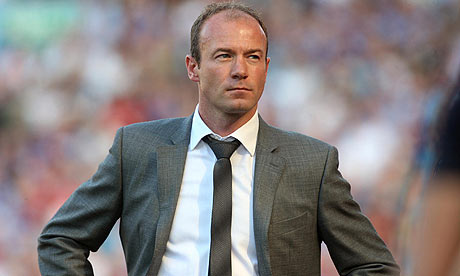
Alan Shearer

Newcastle legend Alan Shearer has said that his beloved club do not want him to be their new manager. In the past, Shearer has said that he did not want to take the role on, but on this occasion he does seem to have ‘thrown his hat in the ring’.

Shearer claims that he received a phone call from the club telling him that they were looking for an experienced manager, therefore effectively ruling him out of the running.

Some of the devoted Toon army will be devastated by this news. They long for the passion and excitement created by Kevin Keegan a few years ago, and they firmly believe that their favourite son was the man to do it.
Shearer himself believes that he could turn the fortunes of the club around, and will be disappointed that he is not being considered.

So is it wise for a player who was a hero with a club to take over that club as manager? A look at the history suggests that it is a risky business. There Are a long line of men who were heroes as players but then became less liked as they failed to achieve success as the manager. Glen Roeder at Newcastle, Brian Little at Aston Villa, Colin Todd at Derby, Alan Ball at Southampton, Ossie Ardilles at Tottenham. All heroes as players and failures as managers, leaving the clubs under a cloud.

I think it would be a great shame if this happened to Shearer who was one of the true greats. Of course, he could take over the club and be an instant success. I consider that to be unlikely as some great and experienced managers have tried and failed. Dalglish, Gullit, Robson, Souness and Allardyce were hardly novices with no track record when they took the St James’ Park hot seat.

If Shearer wants to become a manager then he should learn his trade at smaller clubs, much as Paul Ince is doing at Milton Keynes Dons, and then when he has served his apprentiship he could stride into Newcastle and maybe, just maybe, be a hero as a manager as well. One day, someone will win something for the Geordies, and they will be guaranteed hero status for life. Don’t bet against it being Alan Shearer in a few years time.