Friday, August 5, 2011

How to Dominate Your Fantasy Football Draft

Only those who've been through the ordeal know the intensity involved in a fantasy league draft. Whether it's regular drafting or an auction, you need to be prepared to make the right decision under pressure. While picking the elite players is always a no-brainer, it's what you do with the rest of your picks that could potentially have your fellow teams kicking themselves later on. Here are several, often overlooked, ways to dominate your fantasy football draft.

First and foremost, do your statistics research. There's no better advantage than knowledge. Print out lists of the top players for each position, as well as possible sleepers. If you have trouble remembering them all, just list the starting players for each team. Every team has a go-to wide receiver and running back and many are forgotten. For example, those who did their research for 2009 would have realized that Cedric Benson (RB Cincinnati Bengals), who did nothing for most of 2008, quietly rushed for nearly 400 yards in his last three games -- and seen a possible breakout season coming. 

Aside from prior year performances, follow the real NFL draft and make note of the rookies. Don't just listen to the hype. Try to figure out who has the best chance of starting. The most valuable rookies tend to be running backs. Although the 2009 season was unusually quiet, who could forget the effect first-year running backs Matt Forte (Chicago Bears) and Chris Johnson (Tennessee Titans) had just one year before? Every year there are several rookies who turn out to be worthy of one of your picks. 

Once things are underway, be aware of what positions other teams are drafting. As always seems to happen, when one or two teams draft a certain position, a slew of others will follow suit, desperate to snag one of the supposedly better players before it's too late. Don't fall into this trap. Instead, head in the opposite direction. 
For instance, if your league is going all out for tight ends, go for a decent back-up running back while no one is thinking about it. Imagine how happy you'd be if, in 2009, you hadn't chased down Jason Witten (TE, Cowboys) but had gone for for Ricky Williams (RB, Miami Dolphins) instead. So what if you're the only one who ended up with a no-name tight end? The chances are pretty good that a breakout, such as Vernon Davis (TE, San Francisco 49ers), will go un-drafted and be waiting for you on the waiver wire.

Finally, never choose a kicker or defense until the last two rounds, and never draft more than one of each. Why? First, although some kickers are generally better than others, there are plenty to choose from. Not to mention, they usually start getting dropped once the bye weeks roll around anyway. 

Defenses have more upside, but are harder to predict. In 2009, the top two fantasy defenses were the San Francisco 49ers and the New Orleans Saints; considering their performances the year before, it's almost guaranteed they were undrafted in your league when the season began. Again, use up those bench spots for potential sleepers and rookies. 

After the dust has settled, if you don't feel you did as well as you'd hoped, don't sweat it. In reality, the fantasy football draft does not make or break anyone's season. In fact, a lot of successful teams are the ones that feel they've blown their initial picks so they have no problems taking risks on free-agents. 
Try to create the right balance. Focus on picking up the absolute, sure-fire studs in the first few rounds, but after that, feel free to take some chances. Your league mates will be a lot more impressed if you bring home the trophy on the back of Ray Rice (RB, Baltimore Ravens) instead of Peyton Manning (QB, Indianapolis Colts). And isn't that what it's all about?

Did the Fiesta Bowl Show Us Anything?

Leading up to the college football bowl season one of the most anticipated announcements was who would be matched up against TCU and Boise State. The bowls pulled a dirty trick on all of us and matched them together. This led many to cry foul. What could be learned of these two teams, carrying the weight of the non-BCS conferences on their shoulders, if neither were to play Florida, Cincinnati, Iowa or Georgia Tech?

This was the ultimate chance for the non-BCS conferences to stand up and yell with one or two wins against the big boys. With this chance gone, many felt as if the Fiesta Bowl held very little meaning this year. Of course, it was frustrating not to be able to see TCU or Boise State play a BCS school, but that doesn’t mean the Fiesta Bowl had to disappoint. It doesn't mean there was nothing to learn from this match up of unbeatens.

You may have noticed from the outset the team speed of both squads lacked nothing when compared to other elite programs. Both Boise State and TCU have the speed to match up with any team in the nation, and on both sides of the ball. TCU's front line was explosive and the skill players of both teams had the potential to break a big play at any moment. This type of anticipation is what makes for an interesting game.

Both TCU and Boise State want to be recognized as big time programs. One true sign of a big time college football program is a strong fan base. If you witnessed this game, you saw a packed house and plenty of noise coming from the fans of both schools. The atmosphere for this game could not have been better. The fans, players, and coaches showed the intensity of a national championship game that could be felt on the couch in your living room.

Defense wins championships. The top teams in the nation like Alabama, Florida, and Texas can score points, but they win because of defense. The most impressive part of this game was the defense played by each team. Each offense averaged over 40 points per game during the season, but they combined for only 27 points in the Fiesta Bowl. Indeed, championship defense was on display against two of the best offenses in the nation.

On the flip side, the biggest difference between the non-BCS powers and the BCS powers is roster depth and size along the defensive and offensive front lines. Alabama's second and third string guys could be starters for many other quality programs. This allows the Alabamas and Floridas to punish teams with fresh, capable bodies to the point that they simply wear down opponents by the fourth quarter. This is still missing from teams such as TCU and Boise State.

The biggest disappointment of the Fiesta Bowl was that the ultimate issue that many thought would be resolved this year was not resolved. That being, does either the Mountain West or WAC deserve an automatic spot in the BCS. If Boise State and TCU had both won BCS bowl games against BCS conference opponents, then the case for both conferences would have gained more credibility and their cause would have gained possibly unstoppable momentum. This did not happen.

The WAC and Mountain West combined for a 6-3 bowl record and the top teams in each conference put on a good show for the nation in a major bowl game on national television. After some jitters to begin the game, the teams settled down and looked like they belonged in the spotlight. If anything can be learned from the Fiesta Bowl, it is that while it may still be a little too early to grant either or both conferences an automatic bid into the BCS, the time is fast approaching.

Thursday, August 4, 2011

The Golden Age of the Super Bowl

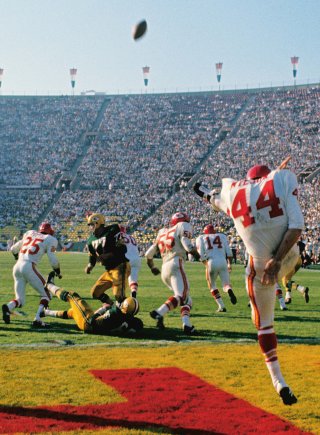
The Super Bowl is a uniquely American event that unites many of our country‘s vices, such as TV watching, gambling, and consumerism. The party atmosphere and surrounding spectacle of the Super Bowl help hide the fact that the games themselves have a reputation for being lopsided and anticlimactic. Increasingly, though, the games are proving to be worthy of the hype. While the first Super Bowls were characterized by mismatches and a lack of drama, recent Super Bowls have been home to numerous fantastic finishes.

Starting with Super Bowl I in 1967, the first 24 Super Bowls were largely lackluster, featuring an average victory margin of 16.7 points. The Green Bay Packers won the first two Super Bowls by an average of 22 points, setting the tone for the crushing defeats that would follow. In the 1970's, the Minnesota Vikings lost four Super Bowls, and none of them were closer than 10 points. During the 1980's, the Super Bowl went from bad to worse. From 1981-1990, the average margin of victory was 21.9 points. The San Francisco 49ers capped off this brutal stretch by pummeling the Denver Broncos 55-10 in Super Bowl XXIV.

On the heels of the biggest drubbing in Super Bowl history, it certainly didn’t seem like the Super Bowl was about to hit its stride. Everything changed, however, when the New York Giants faced off against the Buffalo Bills in Super Bowl XXV. That game featured a classic clash of styles: the Bills boasted a high-octane offense, while the Giants possessed a fearsome defense. The Giants clung to a late lead, but the Bills had enough time to line up for the potential game-winning field goal. When the Bills’ kick missed, the Giants won the game by the slimmest of margins, 20-19. Almost 20 years later, this Super Bowl is still one of the most iconic.

Though some recent Super Bowls have been duds, the trend has been toward closer and higher-scoring contests. The margin of victory of the last 20 Super Bowls has shrunk from 16.7 points per game to 12.5 points. In addition, the average total score of the last 20 Super Bowls is 49.7, an increase of 7.4 points per game from the first 24 Super Bowls. In the past two decades, the National Football League has renewed its commitment to a level playing field, enacting changes such as free agency and the salary cap to pave the way for the competitive balance that exists today. Although there are still dominant teams, the heightened competition enhances the chances of a compelling Super Bowl matchup. Even when the games are less than great, modern rules that benefit the offense keep things entertaining.

The past seven Super Bowls have been particularly intriguing, as every losing team has had a chance to tie or take the lead in the fourth quarter. In five of those seven games, the loser has had the chance to tie or take the lead in the final five minutes. Four of those seven contests have been outstanding thrillers and are some of the best Super Bowls ever. It’s no wonder that this year’s Super Bowl XLIV was the most watched TV program in American history.

The Super Bowl is the rare event that gets better with age. The latest Super Bowls have been thrilling and unforgettable. As athletes continue to become faster and stronger, the game stands to become even better. Time will tell if future championship games will be as riveting, but for now, it’s time to enjoy and appreciate the Super Bowl’s renaissance.

The Case for T.O.

2005 has come and gone, but it will always be remembered as one of the most tumultuous years in American sports history. It opened with the congressional steroid hearings Sports Illustrated called “The Liars’ Club”, continued with the New England Patriots and USC Trojans forming dynasties, and headed into summer with Lance Armstrong’s seventh straight Tour de France victory. We were filled with shock and awe as a finger-pointing Hall of Fame lock became the first MLB star suspended for steroid use, and we admired the big-men San Antonio Spurs, small-town Chicago White Sox, and the superhuman dynamo that is Reggie Bush. Theo Epstein left us when we needed him most and the Red Sox haven’t recovered.

Yet through it all, one name managed to dominate the year in sports news, a man who fell out of favor with fans nationwide more than Rafael Palmeiro, Tyler Hamilton, or even Johnny Damon. I am talking, of course, about Terrell Owens.

Terrell Owens is a wide receiver for the Philadelphia Eagles, and no one will deny that he is one of the game’s most talented players. He’s fast, he’s big, and he has a nose for the ball as good as anyone’s in the NFL. However, he is, has always been, and always will be, forever encompassed by the controversy that comes from an ego the size of the Moon. T.O.’s career started in 1999 for the San Francisco 49ers, and within a year, he had become one of the NFL’s elite receivers. However, he had one too many conflicts with the team, coach Steve Mariucci, and quarterback Jeff Garcia (even going so far at one point as to question Garcia’s sexuality), and following the 2003 season, the Niners traded him to Philly.

Owens signed a seven-year, $49 million contract extension which, while a lot of money to you and me, is below market value for a receiver of Owens’ caliber (Indianapolis’ Marvin Harrison received $67 million over seven years around the same time). And as Owens started catching touchdown passes from franchise quarterback Donovan McNabb and Philadelphia began to run away with the NFC East (as always), T.O. and the Eagles seemed like a match made in heaven.
Until.

Owens went down with a severe ankle injury heading into the stretch run, and although the Eagles easily secured the #1 seed in the NFC, T.O. was unable to play in either of Philadelphia’s playoff victories over the Minnesota Vikings or Atlanta Falcons. With the Eagles headed to the Superbowl to try and unseat King Belichick and his Patriots Dynasty, the football world spent two weeks speculating whether or not T.O. would be able to suit up in Jacksonville. Then, in a heroic effort that could have threatened his career, Owens not only started in Superbowl XXXIX, but had a standout performance with nine catches for over 120 yards through the air as his Eagles lost 24-21 to the Patriots, largely thanks to a Donovan McNabb choke that can be described only as Norwoodesque. Heading into the 2005 preseason, Owens caused waves around football by saying he wanted a new contract (one year into his seven-year deal), and that he would refuse to report to Eagles minicamp if he didn’t get paid. The Eagles staunchly refused to restructure, chastising Owens for not honoring his (non-guaranteed) contract. He showed up to camp eventually, but not before alienating many teammates with his holdout.

As the season began, it soon became very clear that the Eagles were not the team they had once been. It wasn’t clear what had changed, but revamped Washington Redskins, New York Giants, and Dallas Cowboys teams, among other things, had brought down Philadelphia’s stranglehold on the NFC East. And as always happens when teams built with star power begin to lose, the clubhouse and the team’s camaraderie began to unravel.

Disgruntled players like linebacker Jeremiah Trotter and runningback Brian Westbrook joined T.O. in asking the Eagles organization for new contracts, pointing to the monster ten-year deal that McNabb had recently received with three years still left on his contract. It doesn’t take a psychic to read their minds – if Donovan McNabb’s lackluster attempt at a two-minute drill in the Superbowl warrants a $100 million deal, the guy who actually played a fantastic game and put his body and career on the line for team (Owens) should certainly get some kind of raise. Then, when Owens was interviewed by ESPN’s Pedro Gómez in early November, he implied that the Eagles would have a much better record with Green Bay’s Brett Favre at the helm instead of McNabb, and all hell broke loose.

 At long last, coach Andy Reid and the Eagles decided they’d had enough of Terrell Owens and suspended the receiver indefinitely, ultimately kicking him off the team. He has not seen the playing field since Week 8, and his playing status for the future remains uncertain. He will certainly sign somewhere this off-season, but it’s not clear that he’ll have any kind of long-term security; no one will be champing at the bit to give T.O. a big contract. And finally, just about every major sports news outlet has repeatedly printed articles condemning the exiled receiver; over 70% of sports fans on ESPN.com voted that they would not want Terrell Owens on their team. This brings us to where we are now.
And this is when I leave the beaten path and go where virtually no sports analyst has gone before. This is when I come out in support for the NFL’s most unpopular player.

I firmly believe that Terrell Owens was unfairly scapegoated as a result of the Philadelphia Eagles’ problems in 2005. The fact is, the Eagles never really recovered from their loss to the Patriots in the Superbowl, a loss that was greatly caused by Donovan McNabb. Mounting one last drive at the end of the game, McNabb utterly lost his rhythm and inexplicably chose to slow down his offense rather than go with a no-huddle two-minute drill plan. His ample time on the clock vanished remarkably quickly, and my lasting image of Superbowl XXXIX is that of Rodney Harrison securing a walk-off interception on an awful pass from a Donovan McNabb who, ten-year deal in hand, doesn’t appear to particularly care. Yet the Eagles couldn’t blame McNabb for their problems; on the contrary, they’d never dream of ousting their $100 million poster boy for one bad season. So they waited, and Owens, so consistently willing to cause trouble, presented himself perfectly as their target.

If for no other reason than to show they were doing something, the Eagles brought down the wrath of God (or at least Andy Reid) upon Terrell Owens and turned him from one of the game’s best players into Public Enemy No. 1. The NFL has never been enamored of punks like T.O., so they likely relished the opportunity to not only punish the malcontent receiver but to set a precedent that insulting underperforming high-paying players and making their organization look bad would not be tolerated. I’m not defending Owens’ actions, but I do think he had the bad fortune to say the wrong thing at the wrong time. I don’t know if race had anything to do with the T.O. saga, but I do have a suspicion that Peyton Manning might not get much more than a slap on the wrist if he said that the Colts would be better with Shaun Alexander at runningback instead of Edgerrin James.

Terrell Owens is not a nice man. I would not want him over for dinner, I would not like to be his friend, and I would be very distraught if I learned that he was dating my daughter. However, he is one of the best players in the NFL, and with David Givens set to leave New England via free agency, I think he’d look awfully good in the blue and white, teaming with Deion Branch to catch passes from a quarterback who is just about the best there is when the game comes down to one final drive.

Wednesday, August 3, 2011

Golf Ball Review to the Rescue

A golf ball review offers the latest news and reviews for players who are interested in learning more so that they can lower their scores. The product information and opinions featured provide players with a chance to gain helpful knowledge of playability and popularity, as well as finer features.

Whether you are a new player looking for an honest opinion of which brand is the most efficient for its intended task or an experienced player looking for the cream of the crop, a golf ball review is the quickest way to gaining insight into current products. Not only are the leading manufacturers and their products clearly described, but also, lesser-known manufacturers are also depicted.

A golf ball review might detail suggested prices, aiding players in their quest for affordable styles. Plus, if a comparison among manufacturers does not lead to a quick selection, prices can assist players in making their choices. Advice on a wide variety of options can be found in a golf ball review.

Not only does a golf ball review provide the latest information on this essential piece of equipment, but also, it can provide tips on the best places to make a purchase. Plus, novice players can gain a great deal of insight into the game simply be reading a golf ball review filled with essential tips and advice from other players.

Obtaining the best that manufacturers have to offer might help a player to hit further or straighter and lead to a better game. The type of information needed to make the best purchasing decision can often be discovered in a carefully written golf ball review.

Since it’s important to match your equipment to your game, keeping an eye on the latest info found in a golf ball review can be a critical move. The goal of the game might be to score a birdie rather than a bogie, but that small, white orb happens to be as essential to your game as your clubs.

A golf ball review lays it all out not only for novice players but also for experienced or seasoned players. To improve your game and get a handle on the inside track when it comes to this aspect of scoring success at the tee, you should consistently read the latest golf ball review.

A Golf Club Review Can Lead to a Better Game

A golf club review offers an unbiased look at some of the finest equipment from around the globe from classic and timeless to new and improved versions. Plus, players can easily get help with their shopping and select one of the most useful tools for their combat on the green. A golf club review offers tips on how to make a purchase along with suggestions on which items offer the best value for the money.

For a comprehensive, complete comparison of equipment designed to get you to the 18th hole with a minimum of stress or frustration, read a golf club review written by individuals who actually use the equipment. From fairway woods to drivers to putters to irons, the gear that a player utilizes is critical to his performance on the greens.

While tips on how to play your game might prove to be beneficial, owning the proper set of equipment is more likely to ensure that you are on your toes when traversing the greens or navigating sand and water traps. A solid golf club review is the best way to gain access to the type of information that you need about the equipment. Not only can you garner important details about the positive aspects, but also, you can obtain information on potential downfalls.

A golf club review might be the best way to locate an excellent choice that leads to a relaxed swing without any of the tension that commonly occurs when a player isn’t quite sure he has selected the right piece. A better game means a more enjoyable experience. If a golf club review can help you to achieve this, then isn’t it worth a small investment of your time to peruse one?

Insider information on why people are paying hundreds of dollars for the newer drivers is often given in a golf club review. In fact, the main purpose of a golf club review is to offer useful data to help players achieve the ultimate experience.

Finding useful comparisons of well-known brand names within a golf club review often provides descriptive information that can lead to the purchase of perhaps the finest tool in a player’s arsenal of athletic instruments. Therefore, players might find the best equipment to fill the holes in their bag simply by reading a well-written golf club review.

Tuesday, August 2, 2011

Golf Bag Reviews

Golf bag reviews inform players as to the heavyweight contenders in this essential piece of equipment, which might not be critical to the game, but which is certainly critical to the enjoyment of the game. Golf bag reviews let players know the ins and outs of each model or style so that they can select the one that has the options that they need and want.

Instead of debating the finer points of compact versions to larger versions, players can learn more about each product quickly and efficiently. They can create an enjoyable experience right from the beginning by identifying the best technique for carrying all of their equipment. Golf bag reviews provide players with comparisons of prices, styles, and features.

Therefore, reading golf bag reviews is one of the best ways to locate the type of equipment that a player needs to carry all of their gear. After all, everyone has their own personal preferences and wants to purchase a toting method that suits their style for comfort, ease, and functionality.

Golf bag reviews cover all types of carriers for a player’s essential equipment including carts, travel styles, and stands. Plus, they are one of the quickest ways to get the low down on the least expensive ones including discounted and discontinued carriers.

Golf bag reviews provide an easy-to-understand portrayal of what the market currently has to offer. Simplify your game with an easy-to-tote carrying system for your clubs with the best features and more importantly one that is fully equipped.

Players can find out the latest in styles simply by reading golf bag reviews full of essential pieces of information. They can also find out what toting methods will help their clubs survive travel by catching up on the latest in golf bag reviews. Air travel can be especially difficult, but golf bag reviews tell readers exactly what they need to know in order to pick out the perfect toting sack for their own needs.

Whether you are reading golf bag reviews for pleasure or for informative purposes, you are sure to gain insight into the styles and models that are not only preferred by many players, but that are also as classy as they are functional. Put a gleam in your eye and perfection in your swing with the best toting system as outlined in many of the most popular golf bag reviews.

How Far Is It to the Green? My Golf GPS Knows!

How many times have you played golf and wondered how far to the green? In fact, you can probable count the number of times that you haven’t wondered that question on one hand. With a global positioning system or GPS that has been designed specifically for the golf course, you never have to wonder that question again.

No more worrying about the search for distance, how far you need to drive the ball to make it over the trap, or about your entire game of golf. A golf GPS not only simplifies the game for you, it also improves your score. What a win-win situation!

Going from the tee to green is easier than ever. A GPS handily placed on your belt, golf buggy, or golf cart provides any golfer with speedier play and better club selection. Instead of trying to figure out the distance between tee and green, your GPS can supply the statistical information that you need and take the guesswork out of the equation for you.

The professional mapping of courses gives a golfer with a GPS an advantage over all other golfers. As more and more courses are added onto the list of professionally mapped courses, the opportunities open up for avid golfers around the globe.

Advances in technology have led trendsetter GPS devices into the forefront of must have golf equipment. The accuracy of positioning information has improved dramatically. Wouldn’t it be nice to see if your golf scores can improve just as dramatically? The opportunity is there too! After all, with a global positioning system, the golfer has better access to the information he needs to select the perfect club for creating the perfect shot. Taking the guesswork out reduces human error and increases the opportunity to achieve a better shot, a better game, and a better score.

Playing the game of golf can be likened to the creation of a tour de force. Many steps and tools are needed in order to arrive at the final masterpiece. Golf courses are a dime a dozen. Excellent golfers are few and far between. Given the right equipment, however, any golfer can master the game of golf. The Golf GPS is simply one part of this scenario.

Monday, August 1, 2011

Learning the Intentional Hook Shot (aka The Draw Shot)

It has been said that the difference between a hook shot and a draw is intent. That awful looking duck-hook shot that we have all hit at one time or another is usually less common than the slice but is one of the most embarrassing shots to make and it often adds strokes to the scorecard. Having said that, learning to control this shot and to create an intentional draw can be a great way to improve your score and impress your buddies as well.

Why would the average golfer want to learn this shot? There are actually several occasions when a draw shot comes in handy:

To curve the ball around a dogleg left (or an obstacle)
To compensate for a left-to-right crosswind
To gain distance into a headwind (a draw tends to fly lower and roll further than a normal shot or a fade)

The good news about the intentional draw is that there are a routine set of steps you should take in order to make it happen. Once you get the routine down, you can finesse your shots with a high degree of accuracy.

Here are those steps:

1. Line up to the target as if you were going to make a normal shot.

2. Ease your rear foot backwards away from the ball a few inches (this generates a closed stance). The general rule is to not move your aim more than 10 or 20 degrees right of your target.

3. Always keep the club face pointed in the direction of the target. This is one of the mistakes that many players make. They believe that aiming the clubface toward the "draw line" is the way to go with this shot. Nothing could be farther from the truth. Your stance and offset aim will do that work for you.

4. Use a normal, full swing. Avoid the temptation to rush the backswing. Your resulting swing should be inside-out, contacting the inner half of the golf ball, and moving naturally through the outer part of the ball, with a full, high finish.

This swing will cause your ball to fly lower and with greater topspin. It will also give the ball some sidespin. The ball should start out to the right, and then curve back to the left. If all goes well, right on target.

You cannot master this shot without practice. Dedicated practice will tell you how much this set up affects your distance, and whether you should take one less club to compensate. Using less club is important if your goal is just to move the ball to the left, without the extra roll.

As mentioned above, this is a very useful shot for some situations but it can cause trouble in other circumstances. For example, you would not want to use this shot to hit a pin on the front of a green unless you plan to land short of the green and have the ball roll the rest of the way. On the other hand, for a back left pin placement on a large green this shot can be very useful.

By spending some time learning the intentional draw shot you can begin to direct the ball in ways that you have not been able to do so in the past. This is one of the best ways to hit more greens in regulation and shave strokes off your scorecard. Practice this shot on the driving range and you will be amazed at how quickly you can pick it up.

Golf: Perfecting the Fade

There are two shots that most amateur golfers would like to lose: the hook and the slice. The slice is one of the most commonly made mistakes in golf, and virtually every golfer has made this shot at one time or another. When a slice is unintentional, it is considered a bad hit. But when it is intentional is known as a fade. Knowing how to fade the ball (when you want it to fade) can shave strokes off your scorecard and keep you in the fairway more consistently.

There are some occasions when a well played fade will be very useful to your play:

- If you want to direct the ball to the right.

When the wind is blowing from left to right.

If you are faced with a difficult green that may have a very hard surface or is sloping downward.

Here are some tips to help make this shot.

Make sure that you can see the shot in your mind before you attempt to make the shot. You want to mentally see the ball as it moves through the air and lands exactly where you want it to land.

When you address the ball the stance should be open. In order to do this, address as you would usually do, and then draw your left foot back a couple of inches if you are right handed. Reverse this if you are left handed. By the way, this is how you open a stance for any type of shot.

It is important that the clubface be open just slightly in order to get the desired sidespin as the club meets the ball. Be careful, however, and do not open the clubface too much.

Your backswing should be slower than normal. If you bring it back too fast, you run the risk of adding more spin on the ball and you will end up with a wicked slice rather than the nice fade you desire. If during your practice sessions you discover that you are slicing too often, try slowing your backswing a bit. Many times, this will fix that problem.

As with the intentional draw, the intentional fade requires that you avoid the temptation to suddenly modify the mechanics of your swing in order to get the ball flying in the intended path. Let your set up and feet do this work for you. For many amateur golfers this is a matter of trust and faith.

You particularly do not want to fall prey to an inside backswing that leads to an outside swing. This is often done in the hopes of making the ball fly more toward the target. Trust your set up and go through your usual swing. Make sure you swing through and finish high. When this shot is made properly, it is a thing of beauty.

As always, practice is imperative to mastering this shot. When you perform your practice sessions make sure you pay attention to the distance that you are getting with each club. You will want to know the amount of ball carry that you are losing in order to make better decisions as to which club to use.